
Located in the heart of Croatia, Krka National Park is a captivating blend of natural beauty and cultural significance, attracting travelers from all around the world. With its lush landscapes, peaceful lakes, and historical landmarks, this park showcases the incredible artistry of nature alongside the rich history of humanity.
Krka National Park is defined by a system of seven named waterfalls, but they differ in scale, seasonality and visitor access. The main visitor localities reveal the river’s tufa formations, cascades and cultural heritage, while some upper-course waterfalls are protected features rather than regular visitor stops.
If you’re planning a trip to Krka National Park, choose the officially open localities and routes that suit your visit. Skradinski Buk and Roški Slap are the best-known visitor areas, while access to other waterfalls depends on their location, current conditions and park guidance. This is a protected river landscape, not a route on which every named waterfall can be approached in one visit.
1. Discovering the Natural Beauty of Krka National Park
Krka National Park is a protected Croatian national park that attracts visitors with its river landscapes, seven waterfalls, biodiversity and cultural heritage. Krka is not a UNESCO World Heritage Site.
The waterfalls of Krka are not just ordinary cascades; they are natural masterpieces where water gracefully flows over rocks, creating a soothing melody. Let’s embark on an adventure to explore these breathtaking wonders.
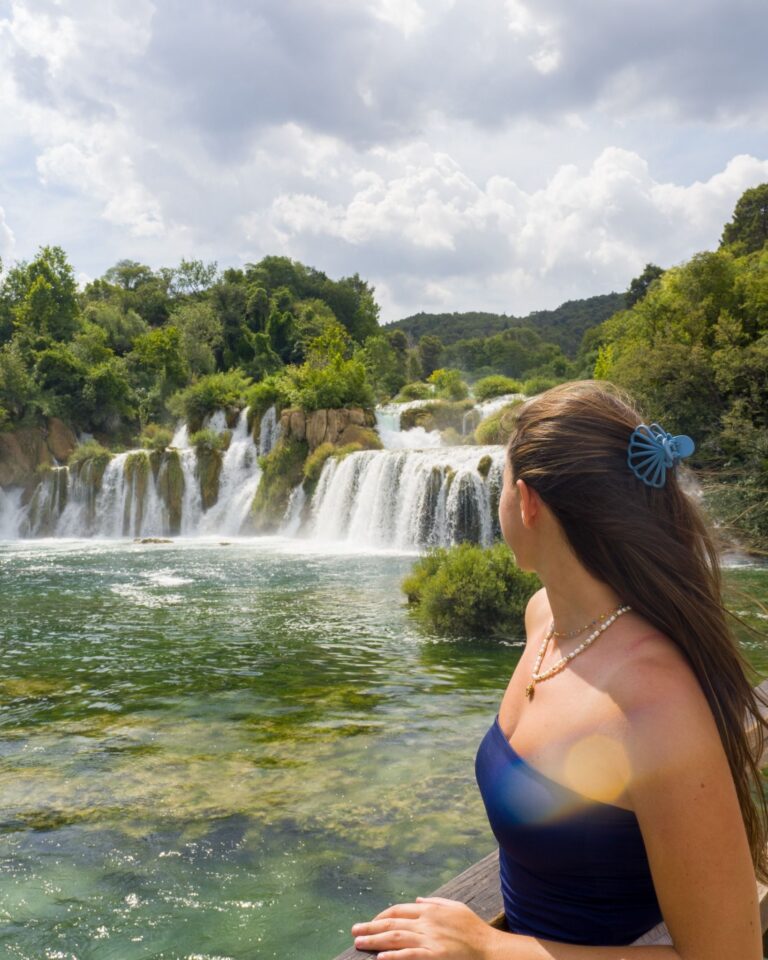
From upstream to downstream, Krka’s seven waterfalls are Bilušića buk, Brljan, Manojlovac, Rošnjak, Miljacka slap, Roški slap and Skradinski buk. Skradinski Buk is the best-known and most visited, where the combined Krka and Čikola waters cross 17 tufa steps beside a marked walking route and historic watermills.
Roški Slap is the second-most visited waterfall and is known for the small cascades called the Necklaces. It can be reached by road. A paid official boat excursion can run from Skradinski Buk via Visovac to Roški Slap, subject to the park’s current schedule, season, water levels, weather and ticket conditions. The included boat from Skradin or bus from Lozovac serves Skradinski Buk, not Roški Slap.
Miljacka slap and Rošnjak are part of the official group of seven, but the 2025 Krka National Park brochure says neither is suitable for visitation. They should be understood as protected features of the river system, not casual visitor stops.
Brljan spills over its tufa step only during periods of high water and is generally most impressive in spring. The upper course also includes Bilušića buk and Manojlovac; official Krka information identifies Manojlovac as the tallest waterfall at 59.6 metres and confirms that these three upper-course waterfalls can be visited using the relevant access routes.
The seven waterfalls differ in scale, seasonality and access. Plan around officially open localities and current routes rather than assuming every waterfall can be approached on one visit.
Krka’s waterfalls are not only visually stunning but also geologically unique—a result of thousands of years shaping this ethereal landscape:
• Travertine Formation: At Skradinski Buk and beyond lies one such marvel—travertine formations sculpted by mineral-rich waters over millennia create stunning terraces cascading downriver like steps fashioned by giants’ hands.
• Historic watermills and hydropower: Traditional mills and early hydroelectric sites show how the Krka River shaped local work and the electrification of Šibenik. Today they are presented as cultural and industrial heritage within a protected landscape.
By exploring Krka National Park’s treasures—from awe-inspiring waterfalls echoing tales untold —to understanding delicate balance between preserving history while embracing sustainable future—you’re drawn closer not only discovering nature’s magnificence firsthand but experiencing profound connection shared humanity entwined everlastingly within her embrace…
Krka National Park, one of Croatia’s national parks, is known for its travertine waterfalls, a natural wonder that captivates every visitor. These formations are created when mineral-rich
waters deposit calcium carbonate, slowly forming impressive limestone barriers. This process has resulted in the magnificent tiers seen at Skradinski buk, the park’s largest and most famous waterfall.
The park’s landscapes reveal tales of ancient times and human creativity. Among these natural marvels, the soft sound of historic watermills can be heard, sharing stories of a past era. These structures not only utilized the energy of flowing water but also played a crucial role in local industry and everyday life. Today, their remains stand as quiet witnesses to history.
Krka National Park also preserves important industrial heritage, including early hydroelectric infrastructure near Skradinski Buk. This history is part of the visitor story, while protection of the river, habitats and tufa system remains central to the park. Check the official Krka visitor brochure for current access guidance.
Krka is protected as a Croatian national park because of its biodiversity, river processes, waterfalls and cultural heritage. Its conservation is managed through national-park rules and visitor controls; it is not a UNESCO World Heritage Site.
2. Exciting Activities to Enjoy in Krka National Park
Krka National Park is a place where nature’s beauty comes alive, offering a perfect blend of adventure and serenity. Whether you want to spend a quiet day surrounded by lush landscapes or embark on an exhilarating journey through the wilderness, this Croatian treasure has something special for every type of adventurer.
When it comes to exploring Krka National Park, you have two fantastic options: guided tours and self-guided exploration. Each choice offers its own unique way to experience the park’s wonders.
A guided tour with NP Tours Croatia can add context to the park’s landscapes, history and ecology. The group still follows public entry procedures and the day’s operating conditions; no private access or guaranteed faster entry is promised.
• Expert Insight: Learn about the park’s unique flora, fauna, and geological formations. • Convenience: Hassle-free arrangements allow you to focus on enjoying every moment. • Uncover Hidden Gems: Guides lead you to lesser-known spots for unforgettable views.
If you prefer setting your own pace and choosing your own route, self-guided exploration is the way to go. With detailed maps in hand, you have the freedom to wander along peaceful hiking
trails, discover enchanting nooks, or simply sit by the water’s edge and soak in the beauty around you.
• Maps & Routes: Grab a map from the entrance to navigate easily through well-marked trails.
• Must-See Spots: Don’t miss Skradinski buk for its breathtaking cascades or Roški slap for panoramic views.
• Plan Your Day: Early mornings or late afternoons offer quieter times to enjoy popular sites.
While Krka National Park is famous for its stunning waterfalls, there’s so much more waiting to be discovered by outdoor enthusiasts.
One of the park’s most recognisable experiences is following the marked route around Skradinski Buk, where boardwalks and viewpoints reveal the waterfall system from several angles. Swimming is not permitted at Skradinski Buk.
Official boat excursions follow defined routes and are separate from the included Skradin–Skradinski Buk transport. Depending on season, weather and water levels, paid options can include Visovac and Roški Slap. Check the current park timetable and price list before relying on a connection.
Explore numerous hiking trails that meander through dense forests and along riverside paths. Each trail offers its own allure—whether it’s a short walk leading to spectacular overlooks or longer routes challenging enough for seasoned hikers.
Booking your adventures ahead ensures seamless experiences, especially during peak seasons when Krka National Park attracts nature lovers from around the world. Whether it’s reserving your spot on an enriching guided tour or planning your self-guided itinerary with precision, preparation is key to unlocking all that this natural wonderland has to offer.
In this land where waterfalls sing their eternal song and lush greenery beckons at every turn, let your spirit roam free as you create memories that will linger long after your visit ends.
Embark on an unforgettable journey through Krka National Park, where nature unveils its treasures just for you. For those who seek to venture beyond the waterfalls, a myriad of adventures awaits.
Swimming is prohibited during the national-park visits described here, including at Skradinski Buk. The NP Tours route may instead make a separate river-beach stop in Skradin after leaving the protected park visit, near the park boat entrance, when current local signs, weather, water and safety conditions allow.
Boat excursions on the Krka River operate only on the park’s defined routes and current conditions. They may require a separate ticket and should not be confused with the regular Skradin–Skradinski Buk boat transport included with the relevant entrance ticket.
For nature lovers, several trails weave through lush woodlands and verdant landscapes. Explore at your own pace along hiking trails and rustic wooden paths, each step revealing another facet of Krka’s natural beauty.
Activities such as canyoning or zip-lining should be researched and booked separately with suitable licensed providers. They are not part of a standard Krka National Park visit or the core NP Tours two-day itinerary unless the written departure confirmation says otherwise.
Whether you’re booking a guided tour or setting out solo, finding activities in Krka NP promises unforgettable memories and endless discoveries.
3. Planning Your Perfect Visit to Krka National Park
Traveling from Split to Krka National Park is easy and allows you to fully experience Croatia’s breathtaking natural beauty. The ideal time to visit Krka National Park is during the spring and early autumn months when the weather is pleasant, and there are fewer crowds. This way, you
can have a more personal experience with nature, appreciating the park’s peaceful landscapes and lively wildlife.
If you want to see both Krka and Plitvice from Split, compare the amount of driving and real park time, not only the number of attractions. NP Tours uses a two-day, one-night route so Krka has day one and Plitvice begins close to the park on day two.
• Two-day combination route: Some operators advertise both parks in one day, but the distance, entry procedures and walking make that a long, rushed itinerary. Separating the parks with an overnight near Plitvice gives each one useful time.
• Guided tours: Compare route length, meeting point, written ticket arrangements and exactly what is included. A guide can add context and simplify transport, but no operator can promise private park access or guaranteed faster entry.
• Transportation: Check whether the written price includes road transport, park admission and any boat element. The boat from Skradin or bus from Lozovac to Skradinski Buk is different from the park’s separately priced excursions to Visovac or Roški Slap.
The connected overnight route begins with Krka, continues inland for dinner and a night near Plitvice, then uses the following morning for the lakes before returning to Split. This avoids repeating the same coast-to-inland drive.
• Day 1 at Krka: Visit the open Skradinski Buk walking route, waterfalls and historic mill area before continuing inland.
• Day 2 at Plitvice: Start close to the lakes after breakfast and follow the most suitable open visitor programme before returning to Split.
Understanding entry fees ahead of time can help streamline your visit:
• Entry Fees: Ticket prices vary depending on the season, with discounts available for children, students, and groups. It’s advisable to check current rates online or consult your tour operator for inclusive packages.
• How to Get to Krka from Split: Independent travelers can opt for public transport options like buses departing regularly from Split’s main bus station. Alternatively, car rentals provide flexibility for those wishing to explore at their own pace. Guided tours remain an attractive choice for convenience and enriched experiences through insightful commentary provided by local guides familiar with Croatia’s national parks.
Exploring these magnificent landscapes promises not just a visual feast but also an opportunity to connect deeply with Croatia’s natural heritage—an experience bound to linger long after you’ve bid farewell to its verdant vistas.
Trogir lies west of Split and should be treated as a separate coastal stop rather than a fixed add-on from every Krka locality. Check the route and travel time from the entrance used on your visit.
• Trogir: Wander through narrow alleys where every corner offers a glimpse of history. The Cathedral of St. Lawrence stands as a testament to the town’s rich cultural tapestry.
Šibenik is the more natural nearby city stop from the lower Krka area, but the journey is not a fixed 15 minutes. Travel time depends on the selected park entrance, traffic and route.
The UNESCO-listed Cathedral of St James is known for its stone construction and blend of Gothic and Renaissance design.
• Šibenik: Explore its medieval heart where fortresses stand sentinel over the azure Adriatic Sea.
These nearby towns add depth to your Croatian adventure with their fascinating histories and lively local culture. Whether you’re drawn to magnificent buildings or have a thirst for knowledge about the past, Trogir and Šibenik provide enriching experiences after your trip to Krka National Park.
The Cultural Significance Of Krka National Park
Krka National Park is not just a paradise for nature enthusiasts; it also holds great cultural and historical importance for Croatia. Within this beautiful sanctuary, the echoes of centuries past can be heard through traditional villages, sacred monasteries, and ancient ruins. Every step you take uncovers layers of history and cultural heritage that have been preserved and cherished over generations.
As you explore the park, you’ll come across traditional villages that are more than just scenic backdrops. These villages are living museums where local customs and traditions are an integral part of daily life. Residents continue to practice age-old skills such as intricate weaving techniques passed down from their ancestors. These communities serve as protectors of Croatian culture, inviting you to immerse yourself in their rich history and experience a way of life that has stood the test of time.
Enhancing your journey, the ethnographic collections within the park provide insight into Croatia’s cultural essence. These collections meticulously showcase local traditions, capturing the essence of daily life in bygone eras. You’ll encounter displays of beautifully crafted textiles, each piece telling stories of skilled artisans who have perfected their craft through generations. This glimpse into the past not only enriches your understanding but also deepens your appreciation for the enduring spirit of these communities.
Visovac Monastery
Nestled peacefully on an island surrounded by calm waters, Visovac Monastery is a symbol of spiritual tranquility with a history dating back to the 15th century. As you approach this sacred site, let the gentle ripples of water transport you to an era when Franciscan monks sought refuge here. The monastery’s walls hold stories of resilience and devotion, serving as a guardian for invaluable manuscripts and artifacts that have weathered tumultuous times. Take a leisurely stroll through its serene gardens and soak in the tranquility that has attracted pilgrims for centuries.
Burnum/Puljane
Venture deeper into the park to uncover the archaeological wonders at Burnum/Puljane. Here
lies evidence of ancient Roman presence in Croatia, with ruins whispering tales from a long gone era. Explore remnants of an amphitheater where Roman legions once gathered and wander through what remains of military encampments. This site offers a fascinating glimpse into Roman engineering prowess and military strategy, inviting you to envision life during those vibrant times.
These historical sites within Krka National Park are more than just attractions; they represent crucial elements in Croatia’s rich historical narrative. Each site beckons with its unique story, waiting for you to unravel its mysteries and connect with the lives that shaped them.
Embrace this journey through Krka National Park—where nature intertwines with history—and discover how these cultural landmarks continue to mold not only the landscape but also the spirit of those who call this place home.
Conclusion: Your Adventure Awaits In KRKA NATIONAL PARK!
Krka National Park is a place where you can experience the beauty of nature in Croatia. Picture yourself surrounded by the soothing sounds of waterfalls, vibrant greenery, and the melodies of wildlife. Here, you can explore scenic trails, feel the refreshing mist on your skin, and stand in awe before the magnificent waterfalls that make this park special.
But as you immerse yourself in this natural wonder, remember the importance of protecting it. Be mindful of your actions and strive to be a responsible visitor:
• Stay on marked paths to preserve delicate plant life.
• Respect wildlife habitats, observing animals from a distance.
• Leave no trace—take only memories and photographs.
Your visit to Krka National Park is not just an adventure; it’s an opportunity to practice sustainable travel. Each step you take should reflect your commitment to safeguarding this sanctuary’s beauty for future generations. As you prepare for your journey, remember that every moment spent here is a reminder of nature’s awe-inspiring wonders—an adventure waiting for you to fully embrace.
Planning from Split? If you want to see both waterfall parks without a rushed day-trip feel, read about our 2-day Krka and Plitvice tour from Split, or send NP Tours Croatia a quick inquiry.